From the dallah our grandparents handed down to the espresso machine at the café, every tool gets the flavour out its own way. Here are the best-known machines and tools, and when each one makes sense for you.
☕ Before you buy
- The grinder matters more than the machine: a burr grinder grinds evenly, while a blade grinder makes dust that clogs filters.
- Know your drink: if you love lattes you need espresso; if you love clean specialty coffee, start with a V60.
- Budget: manual brewers cost a lot less and still make excellent coffee.
Espresso machine
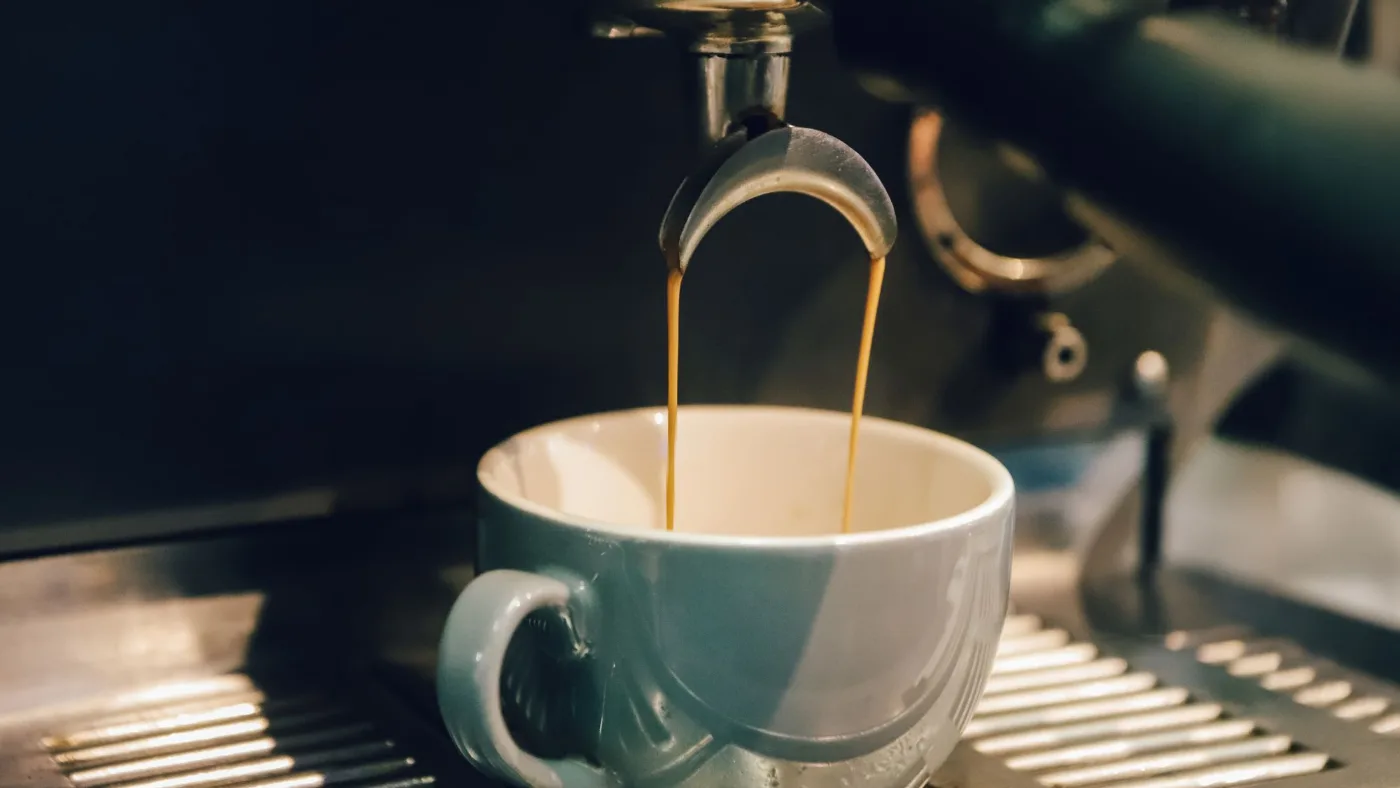
It pushes water at 91–95 °C, usually at 8–10 bar, through finely ground, tamped coffee, and out comes a concentrated shot with crema on top. Angelo Moriondo of Turin patented a steam coffee machine in 1884, Luigi Bezzera improved it in 1901, Achille Gaggia brought in the lever machine in 1945, and pump machines arrived with the Faema E61 in 1961.
- Manual lever: you control everything, but it takes practice.
- Semi-automatic: the most common at home and in cafés; you grind and tamp, the machine pumps the water.
- Super-automatic: grinds and brews at the press of a button. Easiest, and most expensive.
- Capsule machines: everywhere since the 2000s. Quick and tidy, but each cup costs more and the choice is limited.
Moka pot
A metal pot that goes on the stove: water boils in the bottom and the steam pushes it up through the coffee at 1–2 bar. Alfonso Bialetti made it popular in Italy from 1933. The coffee is strong, close to espresso but without crema, and it’s a great choice on a budget.
French press
A glass jug with a plunger and a metal mesh. You steep coarse coffee in hot water for about 4 minutes, then press. The result is full-bodied and rich. It was patented in Italy in 1929. Tip: pour as soon as you’ve pressed so it doesn’t turn bitter.
Pour-over: V60 and Chemex
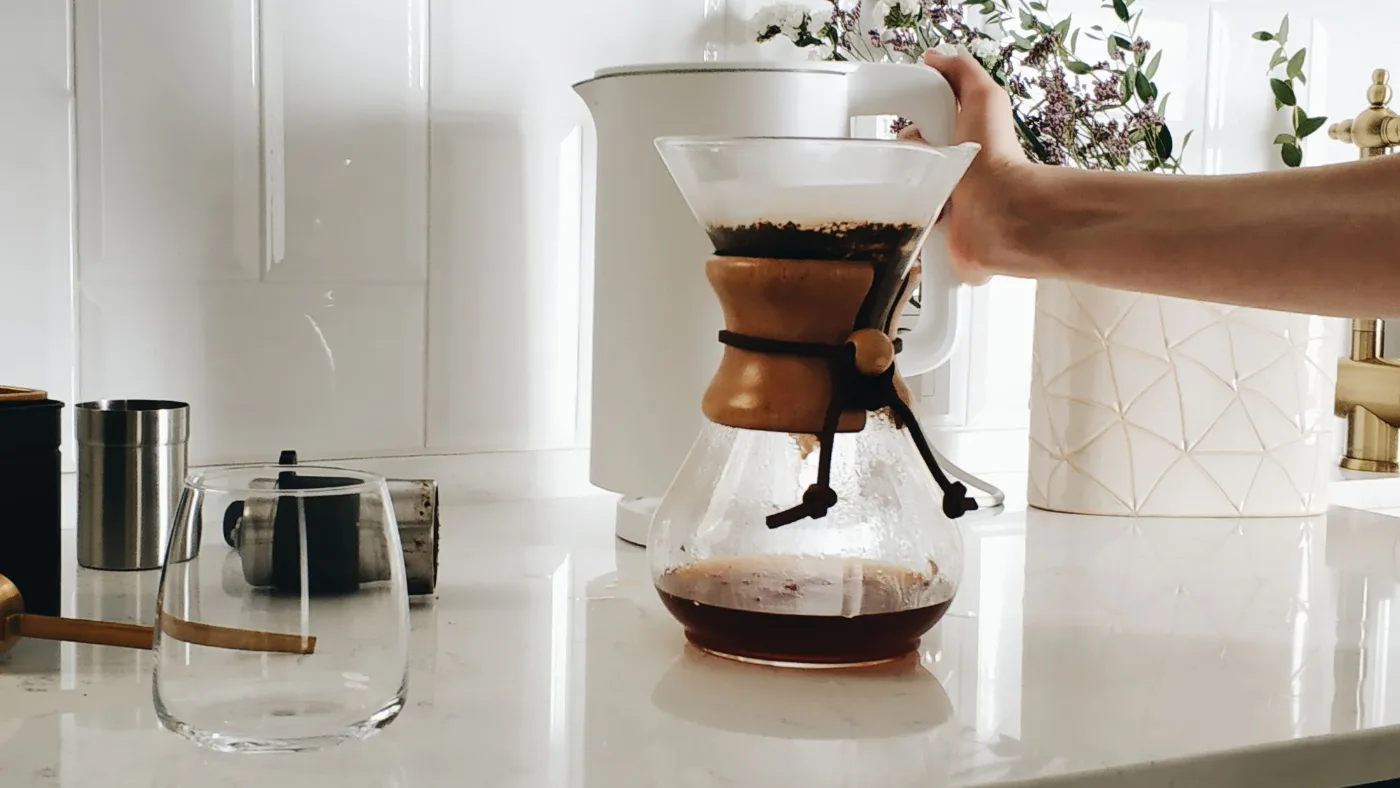
A cone, a paper filter, and water poured slowly in circles. Melitta Bentz in Germany came up with paper-filter drip coffee in 1908. It brings out the finer flavours in specialty coffee, and you’ll want a gooseneck kettle and a scale.
AeroPress
A light plastic brewer invented by Alan Adler and released in 2005. You press the coffee by hand through a paper filter in about 30 seconds, and get a smooth cup somewhere between a moka pot and a French press. Great for travel.
Electric drip machine
It heats the water and drips it over the coffee for you, handy if you make a few cups in the morning. Pick one that gets the water hot enough and spreads it evenly.
Dallah and cezve: tools of the East
The dallah is the symbol of Arab hospitality: coffee is boiled in it with cardamom and served unfiltered. The cezve is a small long-handled pot for very fine Turkish coffee.
| Tool | Grind | Time | Result |
|---|---|---|---|
| Espresso | Fine | 25–30 sec | Concentrated with crema |
| Moka pot | Fine | 4–5 min | Strong, no crema |
| AeroPress | Fine to medium | 1–2 min | Smooth and clean |
| V60 | Medium | 3 min | Clean, lets the flavour show |
| French press | Coarse | 4 min | Full-bodied |
| Dallah | Medium | 10–15 min | Arabic with cardamom |
| Cezve | Extra fine | 3–4 min | Turkish with foam |
💬 Question for the community: which tool do you reach for every morning? Snap it and share it in the community with #MyKit.
Sources
Sources and licence: This article is partly based on information from Wikipedia (see the links in the article), available under the Creative Commons Attribution-ShareAlike 4.0 licence (CC BY-SA 4.0). The Tacke team rewrote and rearranged the content, and this article is shared under the same licence.
Leave a Reply